Memory
Evidence that doesn’t vanish.
Clues, alibis, and slips of the tongue are saved as memories, and recall blends what they mean with the exact words used. Ask about the matchbook in a later session and the storyteller knows which one you mean.
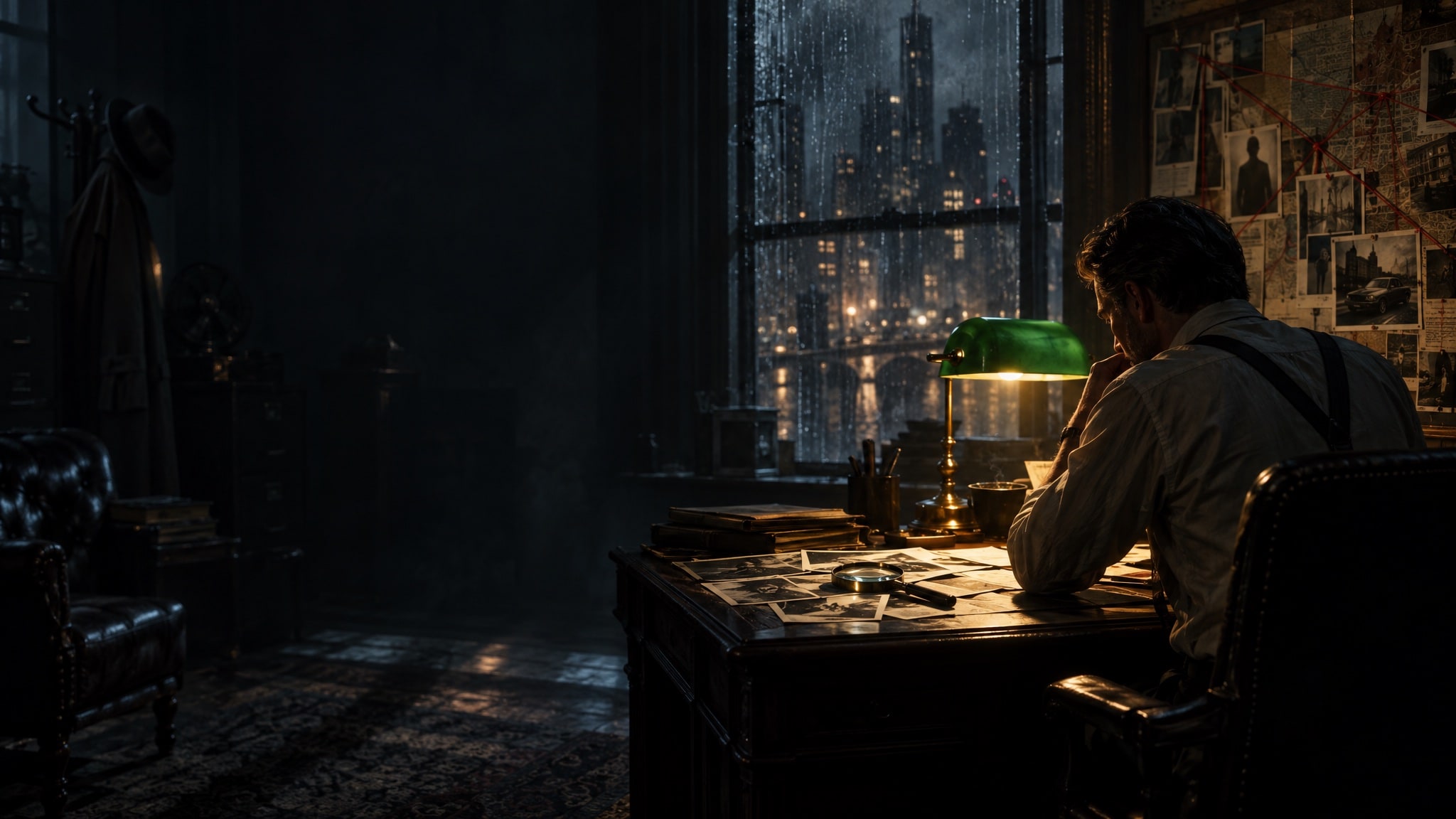
A mystery falls apart when the storyteller forgets the evidence. LoreWeaver keeps your clues, alibis, and interviews across sessions, so the matchbook from the first scene can still break the case in the last.
The short answer
On LoreWeaver it can. The storyteller saves clues, alibis, and interviews as memories and keeps a recap of each session, so evidence from early on is still there when you need it. You can pin key facts on lore cards, and the Loom’s Clue Tracker counts your evidence until the case is ready to crack.
Updated
A mystery scene
Detective stories where you gather the clues yourself.
This is how a mystery story reads once it is under way: the storyteller plays the world and everyone in it, and the reply box waits for your move.
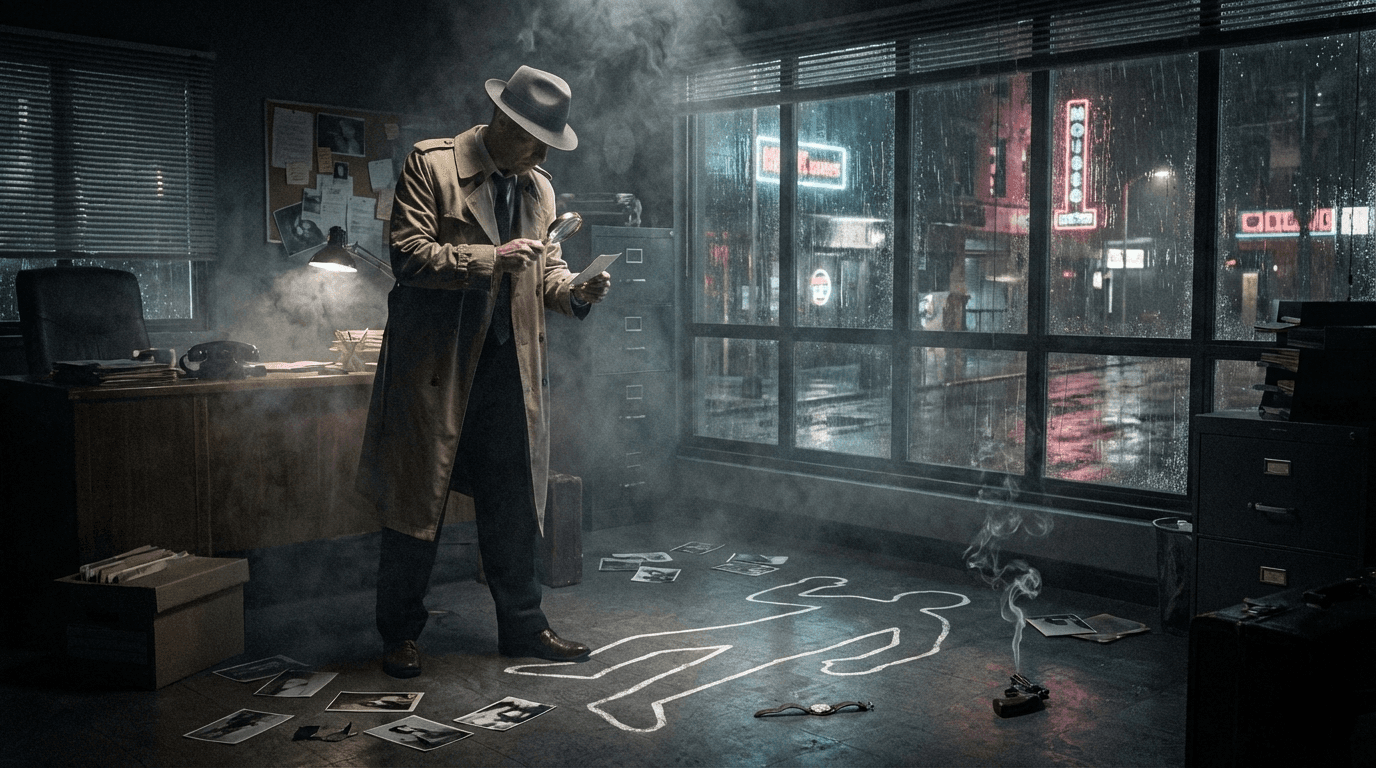
Precinct 9 · 11:48 p.m.
Det. Ruth Calder
“Her ticket stub says Thursday. The murder was Tuesday. Somebody in this family is lying, and it isn’t the dead man.”
From the Hub
Mystery on LoreWeaver
Memory
Clues, alibis, and slips of the tongue are saved as memories, and recall blends what they mean with the exact words used. Ask about the matchbook in a later session and the storyteller knows which one you mean.
The Loom
The Clue Tracker template keeps a clue counter and an investigation quest that resolves once you’ve gathered enough evidence. The quest and its objectives sit in the story HUD.
Lore cards
Give each suspect a card with their alibi, motive, and secret. Mention a name and the card joins the reply, so their story stays straight until you find the crack in it.
The Loom
The Suspicion Meter tracks how wary the household is of you and triggers consequences when it peaks. Press a witness too hard and the story pushes back.
Branches
Branch the session before you accuse anyone. If the theory falls apart, return to the branch point, and keep both versions in the branch tree.
Hidden threads
Publishing a case for others? Hide the Loom threads that hold the twist. Players who download the world can’t see or edit them, but they still fire during play.
Story openings
“The victim’s last message was sent to you: a photo of a room you’ve never seen, captioned ‘I know what you did.’ You have no idea what it means.”
“A woman hires you to find a missing heiress. Within the hour you realize the heiress is your client, and she doesn’t remember hiring you.”
“Three strangers died in three cities on the same day. A year earlier, each received the same anonymous letter. This morning, so did you.”
“A locked room, no weapon, and a security camera that shows the victim arguing with someone the footage can never quite bring into focus.”
“The town’s beloved baker confesses to a forty-year-old murder, then refuses to say another word. The evidence says she couldn’t have done it.”
“The lighthouse keeper reports the same shipwreck every November. There has never been a wreck, but this year a survivor walks out of the surf asking for you by name.”
Kindred genres
FAQ
That’s the problem LoreWeaver’s memory is built for. Clues are saved as memories, each session gets a recap, and key facts can sit on pinned lore cards, so early evidence stays in play.
Yes. Build the case with lore cards and Loom threads, hide the threads that hold the solution, and publish the world to the Hub. Players can’t see hidden threads, but they still fire.
Yes. Set the tone and style rules to hardboiled first person with rain on every window, and the storyteller keeps that voice. Cozy mysteries and police procedurals work the same way.
Yes, as a Loom template. Clue Tracker counts the evidence you gather and resolves an investigation quest once you have enough, all visible in the story HUD.
Yes. Pick a mystery world on the Hub and play 20 replies without an account, then carry on free with 25 premium replies every day.
The story plays it out. If you’d rather test a theory first, branch the session before the accusation and return to the branch point if it goes wrong.
Keep exploring
The case is open
Free to start, with every clue kept from the first scene to the last.