Our story

About LoreWeaver: an AI storytelling platform built to remember.

LoreWeaver is where adults play long stories with an AI storyteller that keeps their history. Here is why it exists, the principles it is built on, and each milestone since the first release.

Live since
January 22, 2026
Made by
The LoreWeaver team
Updated
October 3, 2026
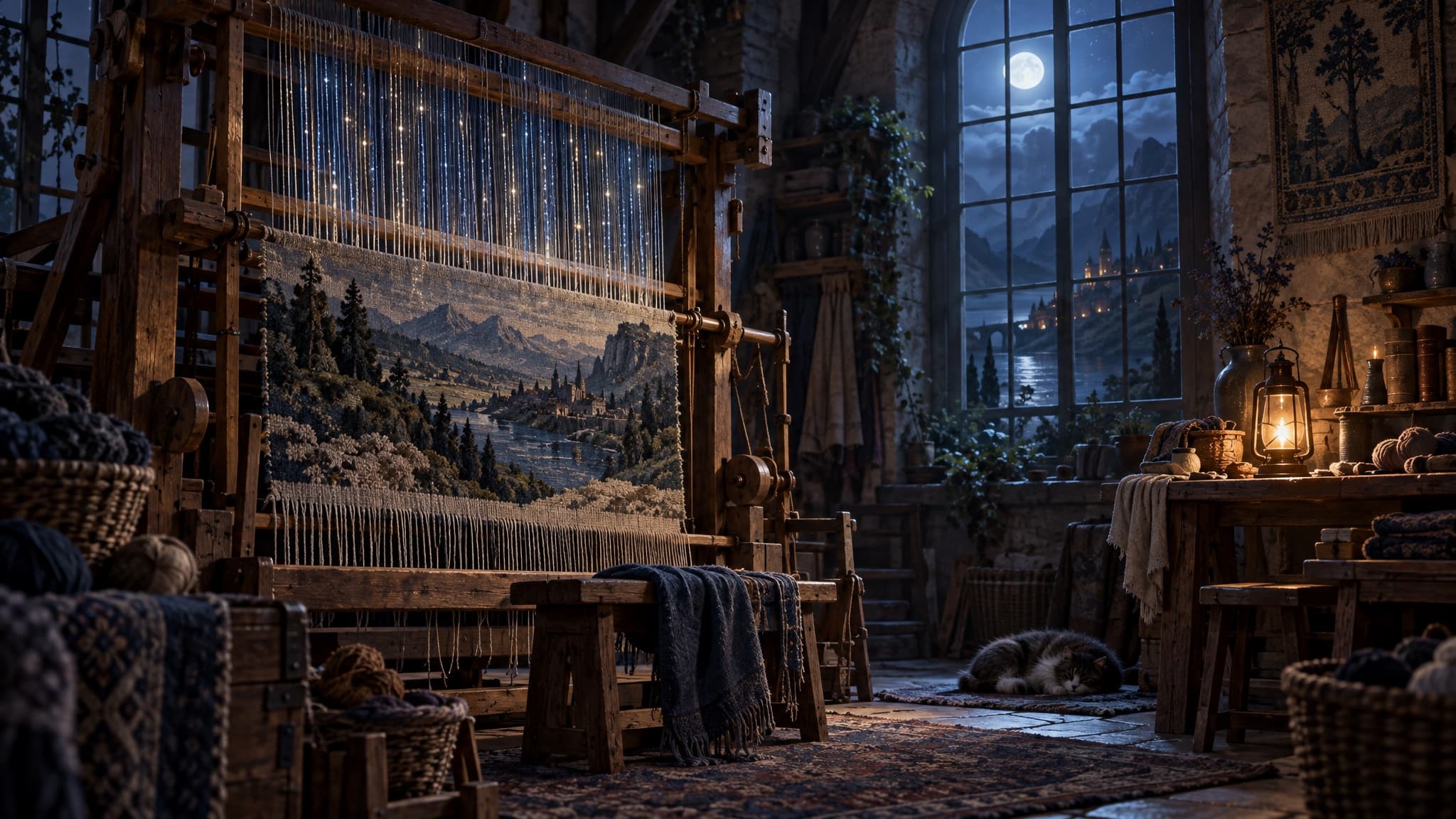
A weaver’s workshop at night: a wooden loom holds a half-woven tapestry of a river valley and castle, moonlight falls through a tall window, a lantern glows on the worktable, and a cat sleeps on the rug.
A loom by moonlight, the tapestry half made. Long stories are woven the same way: thread by thread, with none of them dropped.

The short answer

What is LoreWeaver?

LoreWeaver is an AI storytelling and roleplay platform for adults, built around long-term memory. You play stories in worlds with their own lore, or build your own, and before every reply the storyteller is given your world, the lore cards the scene names, the memories that bear on the moment, a recap, and the latest turns word for word, so a story still holds together months in. It runs in any modern browser, went live on January 22, 2026, and is free to start, with paid plans from $7.99 a month.

Updated

Why it exists

A story is only as good as what it remembers.

Anyone who has played a long story with an AI knows the moment it slips. The innkeeper forgets your name. A sworn enemy greets you like a stranger. The city you burned in the second session is standing again by the tenth. The writing was fine; the storyteller simply could not see that far back.

That is how language models work. They read a fixed amount of text before each reply, and a story that runs for weeks outgrows it. LoreWeaver is built around that one problem. Before every reply, it decides what the storyteller needs in front of it: your world and its rules, the lore cards the scene has named, the memories that bear on the moment, a recap of the story so far, and the latest turns word for word.

Everything else follows from taking memory seriously. Lore cards keep canon from drifting. The Loom lets a twist you planted early wait for its moment. Branches and rewinds keep memories honest when you change your mind, and every memory can be read, corrected, or deleted, because the story is yours.

We build it for adults who take fiction seriously: people who run solo campaigns, write long romances, build worlds for others to play, or simply want a story that still makes sense on its hundredth night. Mature themes are welcome, a short list of things is never allowed, and stories stay private unless you choose to publish them.

LoreWeaver went live on January 22, 2026, and it has grown one release at a time since. If a story stayed whole for you from the first scene to the last, we would love to hear about it. If one came apart, we would like to hear that even more, so write to us.

The LoreWeaver team

What we hold to

Five principles behind every release.

Read the community guidelines
01

Memory

Continuity comes first.

Every part of LoreWeaver answers one question: will the story still hold together a hundred replies from now? Memories, lore cards, the recap, and the Loom all exist to make the answer yes.

02

Authorship

The writer has the last word.

Pin the canon that must always be present, edit or delete any memory, rewrite the recap, and branch a story to try the other door. The storyteller serves the story you are telling.

03

Adult fiction

Dark themes, firm lines.

Fiction may explore violence, grief, fear, and desire between adults. A short list of things is never allowed, in public or in private, and every account belongs to someone 18 or older.

04

Privacy

Private until you publish.

Worlds stay private unless you publish them, and publishing shares the world itself, never your stories, memories, or personas.

05

Portability

Nothing is locked in.

Worlds you build export as files with their lore cards, Loom threads, and LoreMap. Characters arrive from other apps as Tavern cards, greetings and lorebooks included.

The story so far

Since January 2026, one release at a time.

Read the release notes
  1. January2026

    1. LoreWeaver goes liveVersion 1.0

      Memories drawn from the whole session, rolling summaries, and lore scored for each reply, all fitted to the room a reply allows.

    2. Lore that suggests itselfVersion 1.1

      Emergent lore starts reading the story and suggesting cards for new characters, places, and items, which you keep or dismiss.

    3. CharactersVersion 1.2

      A world type made for one-on-one roleplay, with the same lore and memory underneath.

  2. February2026

    1. LoreMapsVersion 1.4

      A map of a world’s lore cards and the ties between them.

    2. VoiceVersion 1.6

      Replies read aloud, and calls where you speak with a character and hear them answer.

    3. BranchesVersion 1.7

      Fork a story at any message into a new timeline that keeps its memories.

    4. The LoomVersion 1.8

      If/then threads that wait for a moment in the story and act when it comes.

  3. March2026

    1. ImportsVersion 1.9.9

      Adventures from AI Dungeon arrive with their story cards and memories, and NovelAI stories and lorebooks follow on a best-effort basis.

  4. April2026

    1. LoreMaps 2.0Version 1.10

      Rebuilt, free on every plan, and able to bring connected lore into a scene when a world switches it on.

  5. May2026

    1. Memory, rebuiltVersion 1.10.7

      The memory system rebuilt from the ground up, with long sessions in mind.

  6. June2026

    1. Loom 2.0Version 1.13

      Meters, quests, an inventory, tappable choices, and a library of one-click templates.

  7. July2026

    1. Threads without limits

      Loom threads become unlimited on every plan, Free included.

  8. September2026

    1. Play before you sign up

      Anyone can open a published world and play before making an account, and the story moves into a free account when they join.

    2. Character card imports

      Tavern cards from SillyTavern, Chub, and Janitor AI import with their greetings and lorebooks.

Keep reading

Where to go from here.